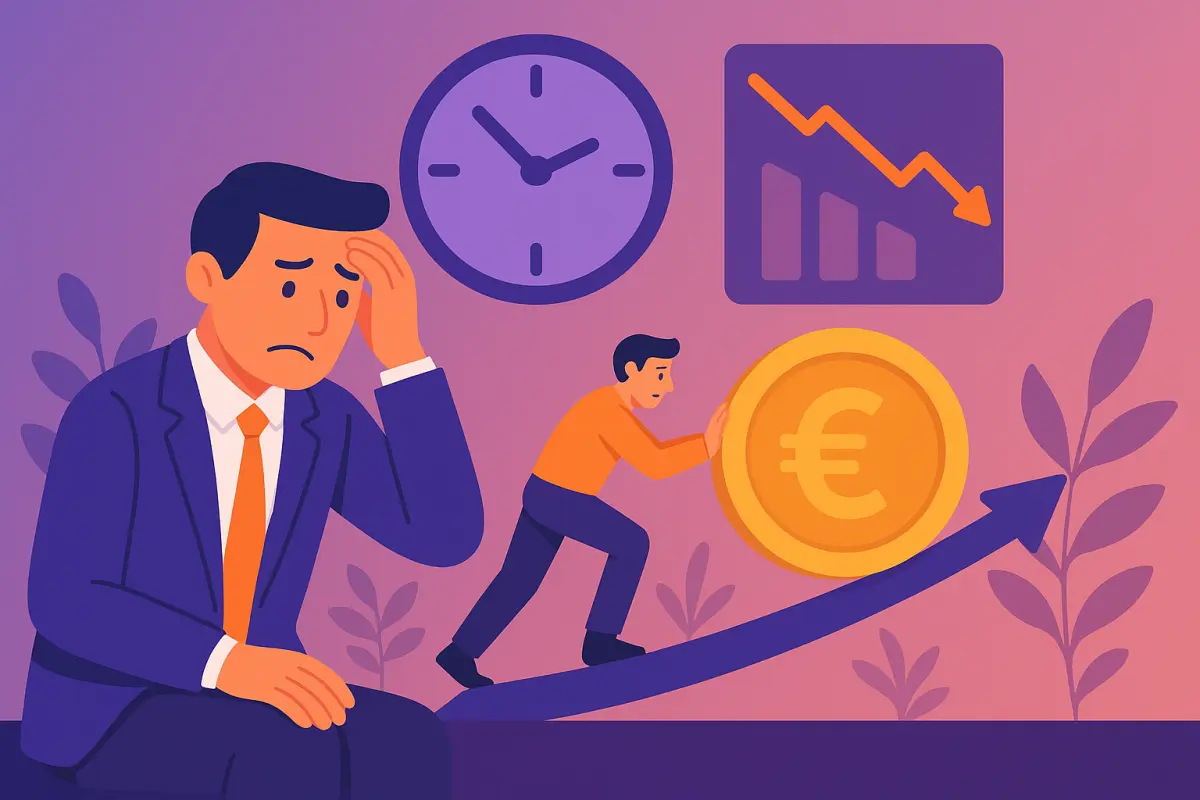
A long B2B sales cycle silently erodes your growth. An inflated pipeline, deals that drag on, ignored buying signals… The result: months lost, burnt‑out teams, inaccurate forecasts. Here’s how these issues take root, and how to detect them before it’s too late.
Why B2B sales cycles keep getting longer
“We thought we’d close in 30 days. It’s been 120. And now, radio silence.”
You’ve likely encountered this situation. It’s common in B2B environments: multiple decision‑makers, several layers of validation, legal back‑and‑forth, budgeting cycles... A long cycle isn’t unusual.
But there’s a trap.
What should have been under control becomes unpredictable. You keep following up, hoping the deal will move forward. But the initial momentum is gone. The buyer’s need may have evolved. The sales rep still believes… but the deal is unlikely to close.
It often starts with poor opportunity qualification, or no qualification at all. The cycle isn’t long because the buyer is slow, but because we believed too soon.
Behind the slowness: 6 hidden consequences
A longer sales cycle isn’t just “a bit more time.” It’s a structural risk.
- Loss of momentum - Priorities fade. The opportunity slowly slips off the client’s radar. Meanwhile, you’re still nurturing it.
- Disconnect from the buyer’s need - The original project may no longer be relevant. If three months pass between the demo and a follow‑up, chances are the context has changed. But your pitch hasn’t.
- A pipeline that doesn’t reflect reality - Deals that stagnate for 90+ days lose predictive value. You’re forecasting on opportunities unlikely to close.
- Sales team demotivation - Reps lose confidence. Working stalled deals is frustrating. Multiply that by 5–10 and you drain time and energy.
- Poor time allocation - Every follow‑up, meeting, or report costs time you won’t get back. It could have been spent on truly qualified leads.
- Degraded KPI visibility - Forecasts look healthy, but many “active” opportunities are dormant. The numbers mask a harsher truth.
In B2B, up to 40% of active pipelines are lost due to poor follow‑up or late risk detection.
The vicious cycle of a poorly qualified pipeline
The problem isn’t always the sales cycle. It’s the commercial approach.
- Opportunities added too early, with weak qualification
- Inflated by the desire to “hit targets”
- Belief that a big logo compensates for lack of urgency
This pipeline is misleading, full of non‑priority, misaligned, or unsponsored deals.
How many opportunities have a known decision‑maker, a validated budget, and a clear business pain? That’s where things slow down.
Constellia helps B2B sales teams detect pipeline risks early and refocus energy on deals that actually close. Discover how →
When the right signals come too late
Risk indicators exist, but are often ignored or noticed too late:
- No reply for 3+ weeks
- Silent stakeholders
- Endless legal reviews
- Deal postponed quarter after quarter
How to act without overhauling everything
You don’t need to reinvent your sales cycle. Just shed light on it.
- Re‑qualify without adding friction - Add two simple questions:
- Does this project have a deadline?
- What happens if nothing changes in 6 months? They can eliminate 30% of false leads, and that’s a good thing.
- Insert checkpoints - Instead of waiting for the “next follow‑up,” set milestones:
- +7 days after demo: personalized follow‑up
- +15 days: decision or removal from the active pipeline
- Prioritize value, not size - A “big” opportunity with no urgency is a trap. A smaller, critical project often closes faster.
- Align perception with reality - Run a deal review every two weeks:
- Where exactly is this deal at?
- Have objections been addressed? Is the decision‑maker involved?
What to remember (but few teams actually do)
A long sales cycle isn’t inherently bad. What’s dangerous is:
- Lack of serious qualification
- Accumulation of stagnant deals
- Wasted sales energy on deals that won’t close
Your growth depends as much on what you close as on what you choose to walk away from.
Have a hunch some deals won’t go anywhere? Time to rethink your sales approach and optimize performance.
Ready to boost your sales performance? Constellia is the sales copilot that helps B2B teams prepare better, prioritize smarter, and close more deals. Request a demo →
FAQ
Why do B2B sales cycles get too long? Because opportunities are poorly qualified, decision‑makers aren’t identified, or the buyer’s process is misunderstood, leading to endless waiting periods.
Is a long sales cycle always a problem? No. It becomes a problem when it’s uncontrolled, poorly managed, or built around deals with no real potential.
What are the signs that a deal won’t close? Prolonged silence, repeated delays, no clear sponsor, unresolved objections, no defined timeline.
How can I shorten my sales cycle without being too pushy? Ask the right questions early, set checkpoints, and regularly reassess the opportunity’s relevance.
What’s the best strategy to prioritize opportunities? Target those with clear urgency, an engaged decision‑maker, and a concrete outcome expected within the quarter.